
Legal audit software can fail even when the audit team likes the tool.
The reason is simple: if the tool sits too far away from the law firm's day-to-day workflow, every audit request becomes extra work. Firms have to export documents, rebuild case context, explain status changes and answer questions that the audit process ought to understand.
That creates friction, delay and weaker evidence.
The workflow gap
Law firms manage live matters in the systems and processes their teams already use. Auditors and funders need visibility into selected evidence, audit findings and compliance status.
If the audit platform is disconnected from the firm workflow, teams fall back to:
- Manual evidence packs
- Email threads
- Repeated case-status questions
- Screenshots and exports
- Separate spreadsheets for audit tracking
- Follow-up calls to understand document context
The audit tool may still create a report, but it does not reduce the underlying operational burden.
Why this matters for adoption
Law firm adoption depends on the audit process feeling targeted and proportionate.
If firms feel that every audit cycle requires them to repackage work they have already done, the process becomes harder to sustain. Auditors lose time chasing context. Funders receive slower updates. Audit records become more dependent on manual reconstruction.
The better model is to bridge the audit layer to the firm workflow.
What connected audit software needs
Connected legal audit software needs:
- Case-level audit cycles
- Targeted document requests
- Evidence linked to review activity
- Findings tied to cases and firms
- Access controls between firms, auditors and funders
- Portfolio-level reporting for funders
- A reliable audit trail created as work happens
It should not require every participant to abandon the environment they already use.
How Lexivoa Connect tackles this
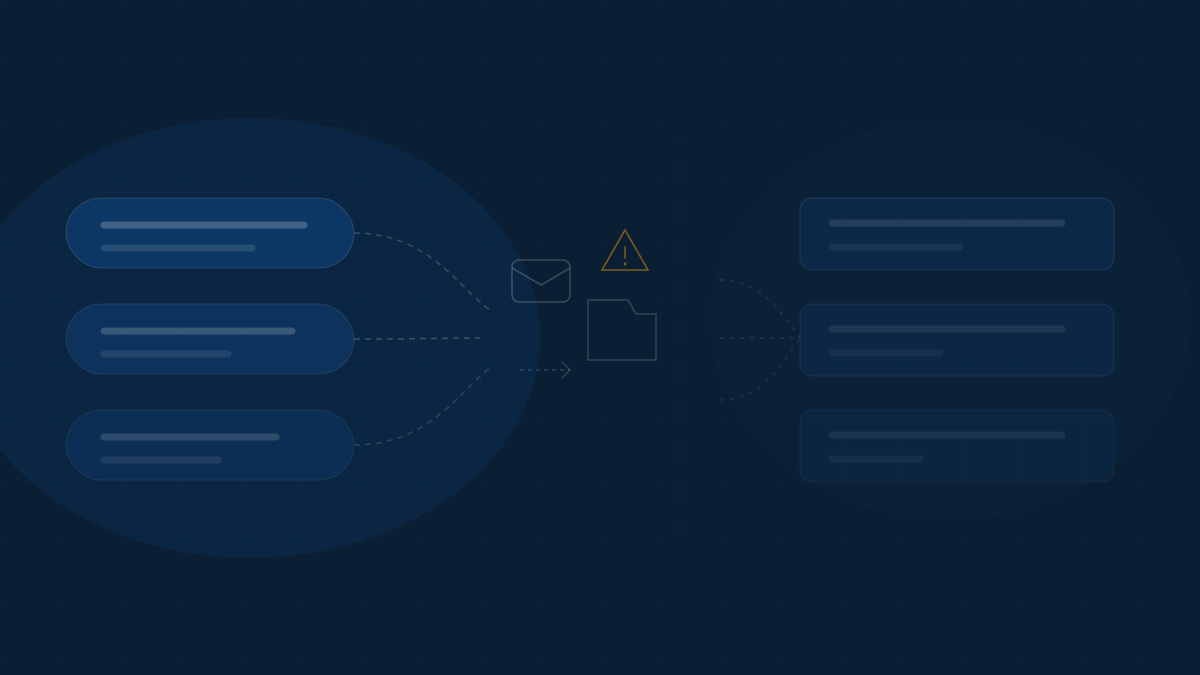
Lexivoa Connect bridges law firm workflows and the Lexivoa audit layer.
It helps auditors access case context and link document evidence back to structured review activity. That reduces the need for firms to manually export and repackage materials each time an auditor needs support.
Lexivoa Assurance then gives reviewers the controlled workflow for evidence requests, findings, notes and sign-off. Lexivoa Mandate gives funders the portfolio-level view of audit coverage, mandate compliance, open exceptions and risk visibility.
AI-assisted review supports the connected workflow by flagging missing evidence or review gaps where the available material does not match expected criteria. It assists triage and completeness checking while audit conclusions remain with human reviewers.
Workflow fit is a governance issue
Workflow fit is not just a usability concern. It affects audit quality.
When the audit layer is disconnected, the evidence trail becomes more manual and more fragile. When the audit layer is connected to firm-side context, reviewers can work from a clearer record and funders can see a more reliable governance picture.
For the broader audit bridge, see Bridging the Gap Between Law Firms and Audit Teams. For the evidence trail this creates, see Audit Records and Evidence Trails in Legal Portfolio Review.
See how Lexivoa Connect bridges the workflow
Lexivoa Connect helps link law firm case context to structured audit review and funder oversight.
See how Lexivoa connects firm-side workflows to the audit layer. Request a walkthrough.
Sources: SRA Lawtech Insight, SRA risk outlook on artificial intelligence.