
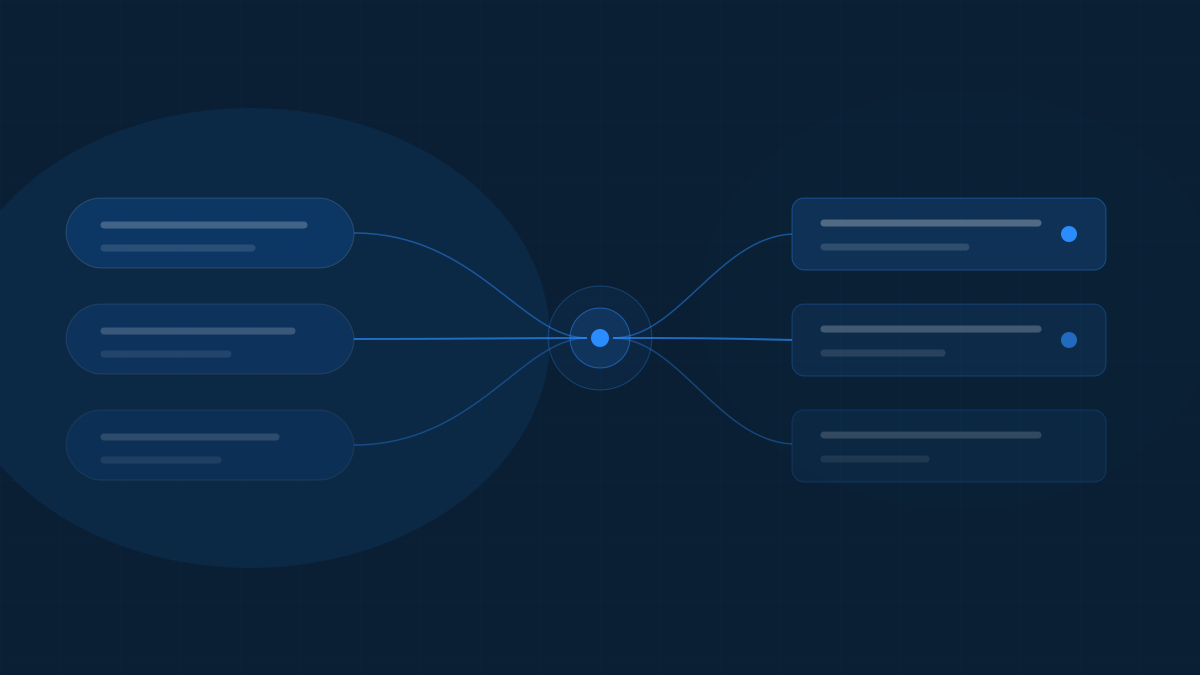
Audit teams and law firms often need to work together, but they rarely work from the same operational view.
Law firms manage live casework inside their own systems. Auditors need evidence, documents, review history and a reliable record of what was checked. Funders need confidence that the cases they support are being handled in line with mandate requirements, reporting standards and portfolio risk expectations.
When those worlds are disconnected, audit becomes slower and less reliable than it needs to be.
The problem: audit evidence lives outside the audit workflow
In many legal audits, the evidence sits in one place, the audit plan sits in another and the communication trail lives somewhere else entirely.
That often means teams rely on:
- Email requests for documents
- Manual exports from case systems
- Screenshots as evidence
- Shared folders with unclear version history
- Spreadsheets to track what has and has not been reviewed
- Follow-up calls to clarify the status of individual cases
This may work for a small number of matters, but it becomes fragile across a portfolio. The more cases, firms, reviewers and funder requirements involved, the harder it is to maintain a clean audit trail.
Why the disconnect matters
The gap between law firm operations and audit oversight creates several risks.
First, it slows down the audit process. Auditors lose time asking for documents, confirming what has changed and checking whether evidence is complete.
Second, it increases the burden on law firms. Case teams are pulled into audit administration instead of staying focused on their live work.
Third, it weakens risk visibility for funders. If audit outputs are delayed or inconsistent, funders may not see emerging portfolio issues until late in the cycle.
Finally, it makes audit records harder to defend. When evidence, reviewer comments, document versions and audit decisions are spread across systems, it is harder to show a clear chain of activity.
What a better legal audit workflow needs
A stronger legal audit workflow should connect the parties without forcing every participant into the same system.
It should give auditors a structured place to request, review and record evidence. It should let firms respond without unnecessary manual reporting. It should give funders a portfolio-level view of coverage, exceptions and progress. And it should preserve the history of audit activity in a way that is clear after the fact.
Used carefully, AI-assisted review can also help at this layer. It can flag missing documents, surface evidence gaps and help reviewers triage cases that need attention, while leaving legal judgment and audit decisions with the human reviewer.
That means the audit layer needs to sit close enough to the casework to understand context, but separate enough to maintain independent review.
How Lexivoa tackles this
Lexivoa connects law firm casework, audit review and funder oversight through three connected product areas.
Lexivoa Assurance gives auditors a structured review cycle for case-level document requests, findings, evidence checks, reviewer notes and sign-off. That means the audit record is created as work happens, rather than reconstructed from emails and spreadsheets later.
Lexivoa Connect brings the firm-side workflow back into the audit layer. It is designed to help auditors access case context and link document evidence to review activity without requiring law firms to manually export and repackage materials for every audit interaction.
Lexivoa Mandate gives funders the portfolio view: audit coverage, exceptions, mandate compliance and the patterns that emerge across firms and matters.
Together, those layers create a governed process for legal audit: firms keep working in their own environment, auditors work through a consistent review layer and funders get clearer visibility into risk and compliance.
What funders should look for
Funders reviewing legal audit software should ask whether the system can show:
- Which cases are in scope
- Which evidence has been requested
- Which documents have been reviewed
- Which issues have been raised
- Which actions are still open
- Which firms or case types create repeat exceptions
- Whether mandate requirements are being followed consistently
If those answers require manual consolidation, the audit workflow is still too disconnected.
For more detail on the record behind those answers, see Audit Records and Evidence Trails in Legal Portfolio Review. For the funder view of the same problem, see Portfolio Governance for Litigation Funders.
See how Lexivoa connects the workflow
Lexivoa is designed for the operating reality of legal audit: law firms continue to manage cases, auditors gain a structured review layer and funders receive clearer oversight of portfolio risk and compliance.
See how Lexivoa connects law firm casework to audit and funder oversight. Request a walkthrough.